
Table of Contents
- How to Improve Sleep Quality Naturally: Start With Your Daily Habits
- Healthy Sleep Habits: The Foundation of Better Rest
- How Many Hours of Sleep Do Adults Need?
- Build a Bedtime Routine for Adults That Signals Rest
- Bedroom Environment for Better Sleep: Quiet, Dark, and Cool
- Natural Sleep Aids: What the Evidence Shows and How to Use Them Safely
- Measure Your Progress and Know When to Seek Professional Help
- Conclusion: Small, Repeatable Changes Beat Overnight Fixes
- Frequently Asked Questions
Last Updated: October 16, 2026
How to Improve Sleep Quality Naturally: Start With Your Daily Habits
If you want to know how to improve sleep quality naturally, start with the hours before bed, not the minutes after. The people who sleep well almost always changed their daytime and evening routines first.

Why Sleep Quality Matters More Than Sleep Quantity
Sleep quality is the measure of how restorative your time asleep actually is, based on how easily you fall asleep, how continuously you stay asleep, and how refreshed you feel the next day. Eight fragmented hours can leave you more tired than seven solid ones.
That distinction matters because the two are not the same thing. According to the CDC sleep and sleep disorders resources, a large share of adults regularly fall short of the rest they need, and the consequences show up in mood, focus, and long-term health rather than in a single bad morning.
Healthy Sleep Habits: The Foundation of Better Rest
Healthy sleep habits are the daily behaviors that regulate your internal body clock and lower arousal before bed. Sleep is governed by two systems: a circadian rhythm that responds to light and timing, and a sleep drive that builds the longer you stay awake. Align them and falling asleep stops feeling like a fight. The foundation, in order of impact:
- A consistent bedtime and wake time, seven days a week
- Morning daylight within an hour of waking
- Physical activity most days, finished well before bed
Set a Consistent Sleep and Wake Schedule
A regular sleep schedule is the single highest-use habit on this list. Your body clock sets itself by when you wake and when you see light, not by when you feel tired.
Pick a wake time you can hold on weekends, then work backward to a bedtime. Drifting two or three hours later on Saturday undoes much of the week's progress.
Get Morning Light and Time Your Exercise Right
Morning daylight is the strongest signal you can send your circadian rhythm. Ten to twenty minutes outdoors shortly after waking helps set the timing of sleepiness for that night.
Exercise deepens sleep for many people, but vigorous workouts close to bedtime can leave you wired. Move intense training to the morning or afternoon, and keep evening movement gentle: a walk, stretching, or light yoga.
How Many Hours of Sleep Do Adults Need?
Most adults need seven to nine hours of sleep per night, according to widely accepted guidance from sleep and health organizations such as the National Heart, Lung, and Blood Institute on sleep deprivation.
The gap between the two is where most people lose ground.
Sleep needs also shift across life. Some people function well on seven hours; others need closer to nine. The reliable test is how you feel across a normal week, not a single night.
Build a Bedtime Routine for Adults That Signals Rest
A bedtime routine for adults is a repeated sequence of calming actions in the 30 to 60 minutes before sleep that tells your nervous system the day is over. The steps matter less than the consistency.
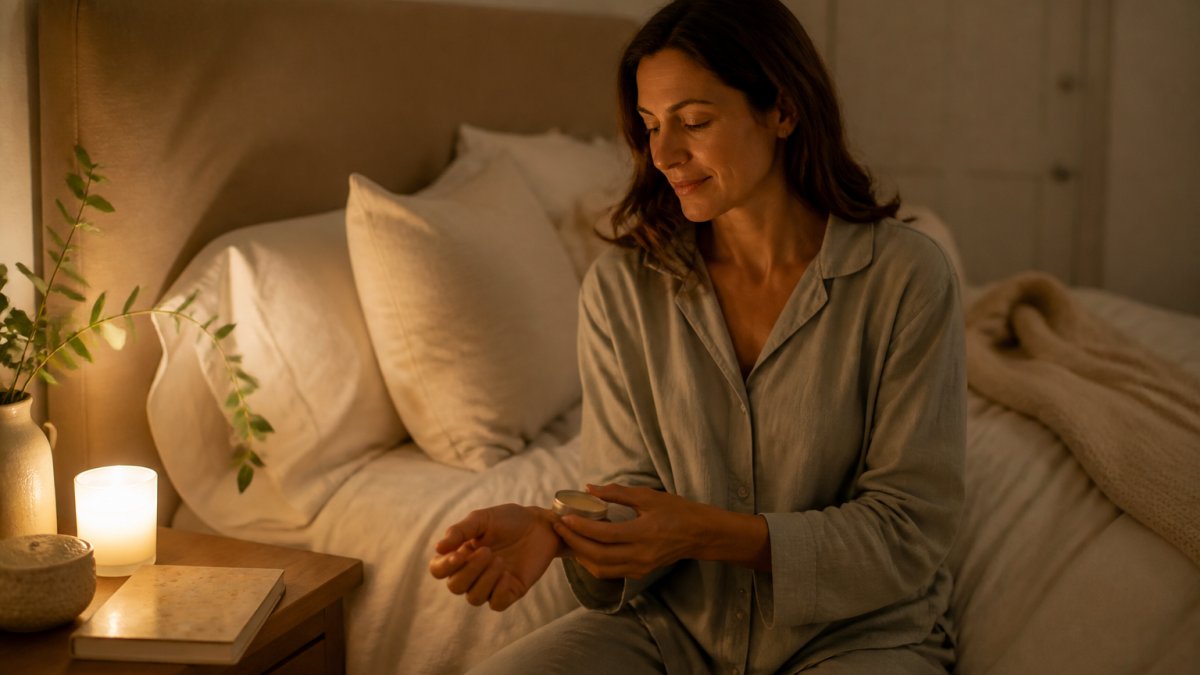
A 30-Minute Wind-Down Sequence You Can Repeat Nightly
This sequence lowers stimulation gradually. Adjust the timing, but keep the order:
- Minutes 0-5: Close the day. Write tomorrow's to-do list so your mind stops rehearsing it. Dim overhead lights.
- Minutes 5-15: Lower the temperature. A hot bath or shower roughly an hour before bed helps many people. The drop in core body temperature afterward is what makes you drowsy.
- Minutes 15-25: Do something low-stimulation. Reading a physical book, light stretching, or slow breathing. This is where a calming scent or a soothing balm on the wrists becomes a reliable cue that sleep is next.
- Minutes 25-30: Get into bed. Keep lights low, phone out of reach, and the room already cool and dark.
The buffer zone between work and sleep is the part most people skip. Without it, you carry the day's mental load straight into bed.
Screen Time, Caffeine, and Alcohol: What to Cut and When
Screen time, caffeine, and alcohol are the three most common sleep saboteurs, each with a different cutoff. Caffeine has a long half-life, so stop it by early afternoon. Alcohol is sedating at first, but it fragments sleep in the second half of the night. Screen time matters less for the light than for what it does to your attention: scrolling keeps your mind activated and delays sleep onset.
Bedroom Environment for Better Sleep: Quiet, Dark, and Cool
A bedroom environment for better sleep comes down to three variables: quiet, dark, and cool. Each removes a reason for your body to stay alert.
Quiet: Mask Unpredictable Sound, Not All Sound
What wakes you is not volume but unpredictability. A steady fan hum fades into the background; a neighbor's car door at 2 a.m. does not. That is why masking works better than silence for most people.
- Steady noise: A box fan, an air purifier, or a white-noise machine set to a constant level. Brown noise is weighted toward lower frequencies and many people find it less harsh.
- Earplugs: Foam earplugs are inexpensive and effective; silicone or wax versions suit side sleepers better. Replace foam plugs when they stop expanding fully.
- Structural fixes: A door draft stopper, a rug over a hard floor, and weatherstripping cut both noise and light, low-cost changes with outsized effects in apartments.
Dark: Control Light in Layers
Even dim light signals your brain that it is still daytime, and light before bed can delay sleep onset. Control it in layers rather than relying on one fix.
- Window coverings: Blackout curtains or a blackout liner behind existing curtains. Fit matters more than fabric, gaps at the edges leak light.
- A sleep mask: The cheapest high-impact option. Contoured masks leave room for your eyes and stay put for side sleepers.
- Small light sources: Cover or remove standby LEDs from chargers, routers, and TVs. Electrical tape over a bright indicator light is a two-second fix.
Cool: Target a Slightly Cool Room
Most people sleep best in a slightly cool room: your core body temperature has to drop for sleep to begin, and a warm bedroom works against that drop.
- Set a target and adjust: A common starting point is the mid-60s Fahrenheit, then adjust up or down based on whether you wake sweaty or cold.
- Use the bath effect: A hot bath or shower roughly an hour before bed raises your core temperature, and the drop afterward is what makes you drowsy. Pair it with a cool bedroom for a stronger effect than either alone.
- Layer bedding: A breathable duvet plus a lighter blanket lets you adjust without changing the thermostat. Moisture-wicking sheets help if you run hot.
Mattress and Pillow Fit: The Variable Most People Ignore
You can fix light, sound, and temperature and still wake up sore. Mattress and pillow fit is the part people change last and notice most.
- Mattress: Most mattresses are replaced every 7 to 10 years, though the right interval depends on materials and how it feels. A mattress that sags, dips, or leaves you stiff in the morning is past its useful life regardless of age.
- Pillow: Match the pillow to your sleep position. Back sleepers generally do well with a medium loft, side sleepers need a taller pillow to fill the gap between shoulder and ear, and stomach sleepers need a thin, soft pillow to keep the neck neutral.
- Budget approach: If a new mattress is not in the cards, a mattress topper can change firmness for far less, and a new pillow is the cheapest upgrade most people can make.
A warm bedroom quietly erodes sleep quality. If your room runs hot, you will likely see more nighttime awakenings and lighter sleep, even when total time in bed looks fine on paper.
3AM Thoughts Off - Deep Sleep Trio Bracelet →
Fix the environment in this order: dark, then quiet, then cool, then mattress and pillow. Light and sound are the cheapest to control and the fastest to show results.
Natural Sleep Aids: What the Evidence Shows and How to Use Them Safely
Natural sleep aids are supportive tools, not replacements for the habits above. Used on top of a solid routine, some can help; used instead of one, they rarely fix anything. "Natural" is not a synonym for "safe." Below is what the evidence supports, where the risks sit, and how to use each category.
How to Read the Evidence on Any Sleep Aid
Before trying anything, ask three questions:
- What is the evidence? A small study showing a modest effect is not the same as a large, well-controlled trial. Many popular remedies rest on small or mixed research.
- What is the dose? Supplements are not held to the same manufacturing standards as drugs, so the amount on the label may not match what is in the bottle.
- What does it interact with? Herbs and minerals can interact with prescription medications, including blood thinners, sedatives, and antidepressants.
If a product promises a dramatic fix, treat the claim with more skepticism, not less.
Aromatherapy: Low Risk, Modest Effect
Aromatherapy is the most accessible option and the lowest-risk one for most people. Lavender and similar calming scents are widely used to support relaxation before bed, and the NCCIH overview of aromatherapy and lavender notes that lavender has been studied for sleep and anxiety with generally mild reported effects.
- How to use it: A balm applied to the wrists, a roller bottle on the soles of the feet, or a few drops on a pillow. The scent works as both a cue and a ritual.
- What to watch: Skin sensitivity is the main concern. Patch-test a new product on your inner arm first, and avoid applying essential oils directly to broken skin.
- Who should skip it: People with asthma or fragrance sensitivity should be cautious, and essential oils should not be swallowed.
Herbal Supplements: Popular, Variable, and Worth a Conversation
Valerian, chamomile, passionflower, and melatonin are the most common options, and they are not interchangeable.
- Valerian and chamomile: Widely used for relaxation, but study results are mixed and product quality varies. Effects, when present, tend to be modest.
- Melatonin: Best understood as a timing signal rather than a sedative. It can help shift sleep timing, after travel or a schedule change, more than it helps with staying asleep.
- What to watch: Herbal products can interact with medications, and some carry liver or sedation concerns at high doses. Talk to a clinician before adding any supplement, especially if you take prescription drugs, are pregnant, or are breastfeeding.
Magnesium: A Reasonable, Low-Risk Addition
Magnesium appears in bath products and supplements alike. A warm soak is a reasonable, low-risk way to add magnesium and heat at the same time, and the heat itself may do as much for relaxation as the mineral.
- Topical vs. oral: Baths and topical products are gentle and unlikely to cause problems. Oral magnesium can cause digestive upset at higher doses.
- Who should be careful: People with kidney conditions should talk to a clinician first.
The Honest Bottom Line on Natural Aids
No natural aid substitutes for a consistent schedule, morning light, and a wind-down routine. If you add one, start with the lowest-risk option, a scent cue or a warm bath, and give it two weeks. If you take prescription medication or have a health condition, clear any supplement with a clinician first.
Our Sleep Well Aromatherapy Balm is built around exactly this idea: a small, repeatable step that pairs a calming scent with the moment before bed. If you want the ritual without the guesswork, our Sleep Well Aromatherapy Balm and the I Am Rested Essential Oil Elixir are designed to slot into the wind-down sequence above.

Natural aids work best as cues, not cures. Their real value is repetition: the same scent, the same time, the same sequence, night after night. Treat evidence, dose, and interactions as the filter before you add anything new.
Measure Your Progress and Know When to Seek Professional Help
You cannot improve what you do not track. A simple sleep diary, kept for two weeks, reveals patterns no single night can.
Record four things each morning: bedtime, roughly how long it took to fall asleep, how many times you woke, and how rested you felt on a 1-5 scale.
| What to Track | Why It Matters | Target |
|---|---|---|
| Time to fall asleep | Measures sleep onset | Under 30 minutes |
| Nighttime awakenings | Measures continuity | 0-1 per night |
| Wake time consistency | Measures rhythm | Within 30 minutes daily |
| Morning restedness | Measures how well it worked | 4-5 out of 5 |
Conclusion: Small, Repeatable Changes Beat Overnight Fixes
Sleep improves the way fitness does: through small changes repeated until they stop feeling like effort. Pick one habit from this guide, hold it for two weeks, and add the next. Most people who struggle with rest are not missing a secret; they are missing consistency.
If you want a calmer, more intentional wind-down, The Calm Edit curates skincare and wellness essentials designed for exactly that moment. Our Sleepy Time Epsom Salt Bubble Bath and Lavender Chamomile Magnesium Bubble Bath turn a soak into a nightly ritual, while the 3AM Thoughts Off Deep Sleep Trio Bracelet gives your hands something calming to reach for when your mind will not quiet down.

Frequently Asked Questions
What drinks should I avoid before bed?
Caffeine has a half-life of roughly five hours, so a 3 p.m. coffee can still be active at 8 p.m. Avoid caffeine after early afternoon. Alcohol is the bigger trap: it may help you fall asleep, but it fragments sleep in the second half of the night and reduces REM. Skip heavy fluids in the last hour before bed to limit nighttime awakenings. If you want a warm drink, choose caffeine-free herbal tea.
What natural habits can help improve sleep quality?
The habits with the strongest support are a consistent wake time, morning daylight exposure, regular physical activity, and a wind-down routine that starts 30 to 60 minutes before bed. Keep your bedroom quiet, dark, and cool, and limit screens in that final hour. Aromatherapy and a warm bath can act as cues that tell your body sleep is next. Pair several of these rather than relying on one.
How can I make my bedroom more conducive to sleep?
Treat the bedroom as a sleep-only space. Set the thermostat between 60 and 67 degrees Fahrenheit, use blackout curtains or an eye mask, and mask noise with a fan or white noise machine. Keep phones and work materials out of reach. If you share the bed, earplugs and separate blankets solve most disturbances. These changes are cheap and take one evening to set up.
Does a consistent bedtime help you sleep better?
Yes, but your wake time matters more. A fixed wake time anchors your circadian rhythm, which in turn makes falling asleep easier at the same hour each night. Aim to wake within 30 minutes of the same time daily, weekends included. Give it two to three weeks before judging results, since your internal clock adjusts slowly. A sleep diary helps you spot whether the schedule is actually holding.
When should I talk to a health care professional about sleep problems?
See a doctor if you have been sleeping poorly for more than three months, if you snore loudly or gasp during sleep, if you feel severe daytime sleepiness while driving, or if insomnia is affecting your mood. These signs can point to sleep apnea or another condition that habits alone will not fix. Bring a two-week sleep diary to the appointment so your doctor has real data to work with.
Better rest rarely arrives all at once. It comes from a routine you can actually keep. Shop your favorites at The Calm Edit and build a wind-down ritual that makes sleep the easiest part of your day.